
Why Keeping a Baby Log Matters: What toTrack During Your Newborn’s First 12 weeks
By Susy Caracas | Founder, Baby N Doula Care
When I arrive for an overnight shift with a newborn, one of the first things I want to know is surprisingly simple:
When did the baby last eat?
That question is usually followed by a few more. How much did they take? When was the last wet diaper? When did they last poop? Did they receive their vitamin D, medication, or another pediatrician-approved supplement? Was anything different about the baby today?

After more than 20 years caring for babies and families, I have learned that these small pieces of information can tell us a great deal.
This is why I encourage the families I support to keep a simple newborn baby log, particularly during the first weeks and often through the first three to four months of life.
Not because parenting should become a spreadsheet. And certainly not because every ounce, diaper, or minute of sleep needs to be analyzed.
A baby log has a much simpler purpose:
It helps everyone caring for your baby know what has happened, recognize what may be changing, and communicate more clearly.
Your Newborn Can't Tell You What Happened Today, But Their Patterns
Can
Newborns communicate through behavior. They cannot tell us, “I haven't eaten as much today,” “My tummy feels different,” or “I've had fewer wet diapers.”
Instead, we observe.
Feeding, urine output, bowel movements, sleep, behavior and weight gain are some of the pieces that help parents and healthcare professionals understand how a newborn is doing.
This is particularly important during the earliest days of life. The CDC explains that feeding frequency and adequate wet and dirty diapers are among the
signs used to determine whether a breastfed newborn is getting enough milk. During the first weeks, breastfed babies commonly feed frequently, often every two to four hours, with some periods of much more frequent cluster feeding.
When you're recovering from birth and waking multiple times throughout the night, however, remembering exactly what happened over the previous 24 hours can be surprisingly difficult.
Was that bottle at 1:00 a.m. or 2:00 a.m.?
Did she drink 2 ounces or 3?
Was the last poop yesterday morning or the day before?
Did Dad already give the medication?
This is where a log becomes incredibly useful.
What Should You Track in a Newborn Baby Log?
I prefer keeping it simple enough that parents and caregivers will actually use it.
1. Feedings
Record the approximate time of each feeding.
For bottle-fed babies, you may also record how much breast milk or formula the baby

consumed.
For breastfeeding, you might record when the feeding occurred, which breast was offered or used, and anything significant you noticed about the feeding.
You do not need to turn breastfeeding into a mathematical equation. The goal is to observe the overall picture.
For breastfeeding families especially, diaper output, feeding behavior and weight gain provide additional information about whether baby is getting enough milk.
A feeding log can also make patterns easier to recognize.
For example, you may begin noticing that your baby feeds more frequently every evening. That doesn't automatically mean something is wrong. Cluster feeding can be normal during the newborn period.
The log gives us context instead of relying on memory.
2. Wet Diapers

During the newborn stage, urine output is important information.
The number of wet diapers changes rapidly during the first days after birth. By around day five, CDC guidance indicates that fewer than six wet diapers per day can be one sign that a breastfed newborn may not be getting enough to eat and warrants discussion with the baby's healthcare provider, particularly when accompanied by other concerns.
Instead of trying to remember at the end of a very long day, simply mark each wet diaper as it happens.
Wet — 2:15 p.m.
That's enough.
Over 24 hours, those little checkmarks create a much clearer picture.
3. Bowel Movements
I also recommend recording bowel movements, especially during the early weeks.
You don't need an elaborate description every single time. Usually, noting the time and anything noticeably different is enough.
And this is an important point for new parents:
Normal poop patterns change as babies grow.
A breastfed baby who poops frequently during the first several weeks may later begin going much longer between bowel movements. The American Academy of Pediatrics notes that by approximately three to six weeks, some healthy breastfed babies may even have only one bowel movement per week, provided stools remain soft and the baby is otherwise feeding, growing and doing well.
That's why a log shouldn't be used to diagnose your baby.
It gives you information that you can discuss with your pediatrician.
4. Medications, Vitamins and Supplements
This is one of the most important reasons I appreciate a shared baby log when several adults are caring for a newborn.

Record:
What was given + amount + time.
For example:
Vitamin
D — 8:00 a.m.
or Prescription medication — 2.5 mL 6:00 p.m.
The American Academy of Pediatrics specifically recommends using a log to track when medications are given to children, particularly when more than one person is providing care, because it can help prevent accidental double dosing.
Parents should always follow their baby's healthcare provider's instructions for medications, vitamins and supplements. A log does not determine what a baby should receive, it simply documents what has already been given. That distinction matters.

5. Sleep
You don't need to record every five-minute newborn nap.
But noting the baby's main sleep periods can become helpful as the weeks progress.
Over time you may begin seeing patterns:
• When does the longest stretch of sleep usually happen?
• Is baby sleeping much more or less than usual?
• When does evening fussiness typically begin?
• Is there a relationship between daytime sleep and the baby's evenings?
During the first months, I am much more interested in observing a baby's developing rhythm than forcing a newborn into a rigid schedule.
The log helps us observe before we make assumptions.

6. Important Changes in Your Baby
This may be my favorite section.
I like having a simple space labeled Notes.
This is where parents or caregivers can document anything that seems different or worth remembering:
“More gassy today.”
“Very sleepy during afternoon feeding.”
“Started using new bottle nipple.”
“Spit up more than usual.”
“New rash noticed on chest.”
“Much calmer after evening feeding.”
“First smile!”
Not every observation means something is wrong.
But if a change continues for several days, having those notes can help parents explain exactly what they've been observing when speaking with their pediatrician.

Your Baby Log Can Make Pediatrician Visits More Productive
You've probably experienced this in your own life.
A doctor asks, “When did this start?”
And suddenly you can't remember.
Now imagine answering that question after several weeks of newborn sleep deprivation.
Keeping basic health information, medication lists, previous appointment notes and questions can help families prepare for medical visits. The AAP specifically recommends reviewing records and notes about previous health appointments, medications, dosages, allergies and questions before a child's appointment.
Your log can also include:
Pediatrician appointments
Weight checks
Lactation consultations
Vaccinations
Specialist appointments
Medications or supplements started or stopped
Questions you want to ask at the next visit
Instead of trying to reconstruct the previous two weeks from memory in the pediatrician's office, you have information in front of you.
A Baby Log Is Also a Communication Tool

This is where I see one of its biggest benefits professionally.
Many babies aren't cared for by only one person.
Mom may breastfeed during the day. Dad may give an evening bottle. A postpartum doula or Newborn Care Specialist may provide overnight support. A grandparent may help in the afternoon. Later, a nanny may become part of the baby's care team.
Without communication, everyone knows only what happened during their shift with the baby.
A shared log connects those pieces.
When I arrive at 10:00 p.m., I don't want an exhausted parent to feel responsible for
remembering every detail of the baby's day.
I can look at the log.
And when the parents wake in the morning, they can see what happened overnight.
12:30 a.m. — 3 oz breast milk — wet diaper
3:45 a.m. — 2.5 oz — wet + bowel movement
6:15 a.m. — 3 oz — wet diaper
That simple record creates continuity.
Everyone begins the next part of the day informed.
This is one reason I tell families:
Don't use the log to judge your baby. Use it to learn your baby.

But Please Don't Let Tracking Become Another Source of Anxiety
This part is equally important.
A baby log should make newborn life easier, not more stressful.
There is no prize for producing the world's most detailed spreadsheet about your three-week-old.
If tracking every minute of sleep or every breastfeeding session makes you more anxious, simplify it.
The first days and weeks may require closer attention to feeding and diaper output, particularly when there are concerns about feeding, hydration, jaundice or weight gain. Your pediatrician or lactation professional may also temporarily ask you to track specific information more carefully.
As your baby grows well and feeding becomes established, the log can evolve.
By months two, three and four, perhaps you're no longer counting every diaper. Instead, you may be using the log primarily for feeding, medications, significant sleep periods, appointments and notable changes.
The log should serve your family—not control your family.
Paper, App or Notes on Your Phone?
Parents often ask me which newborn tracking app I recommend.
My answer is simpler:
Use whatever everyone will actually use consistently.
It can be a notebook on the kitchen counter.
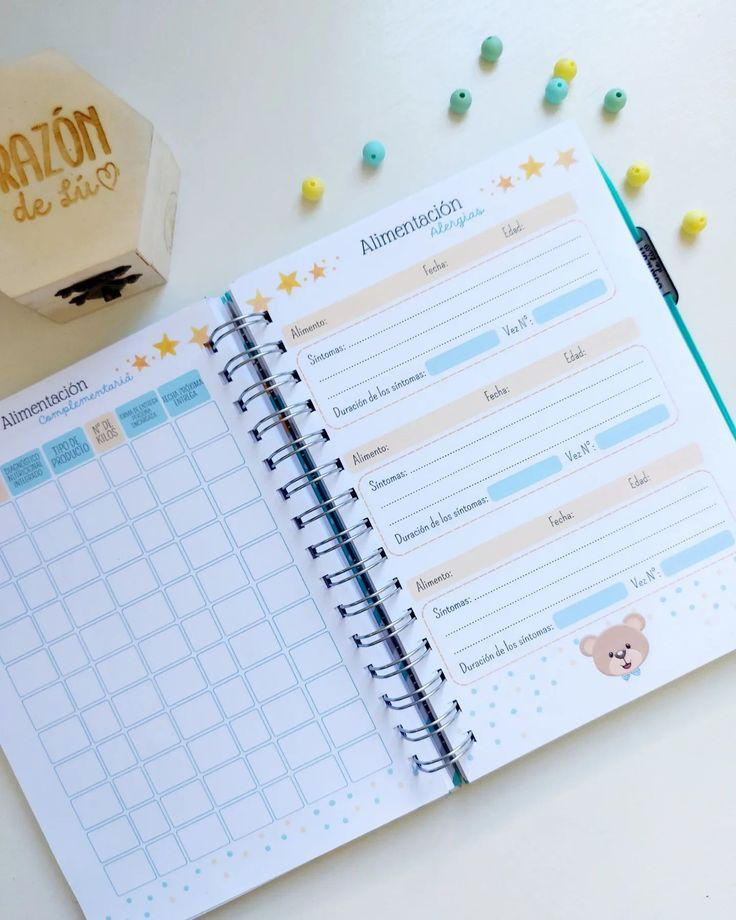
A printed newborn care log.
A shared note on your phones.
A baby tracking app.
Or another system that works for your household.
The technology matters much less than making the information easy for the people caring for your baby to see and update.
For families receiving professional postpartum or newborn care, I especially value a system that allows information to be communicated clearly between parents and caregivers.
What I Have Learned After Years of Caring for Newborns
After caring for newborns for many years, I can tell you that parents rarely need more
information during those first exhausted weeks.
They need the right information, organized simply.
A baby log can't tell you everything about your baby. It doesn't replace your instincts, your pediatrician, an IBCLC or other qualified healthcare professionals.
But it can help you walk into a pediatrician appointment with better information.
It can help one parent know what happened while they were sleeping.
It can help your postpartum doula understand your baby's day before beginning an overnight shift.
And perhaps most importantly, it can help you begin recognizing your own baby's unique patterns.
Because newborn care isn't about making every baby follow the same schedule.

It's about observing the baby in front of you.
At Baby N Doula Care, this is an important part of how we approach postpartum and newborn support. We believe parents should feel informed, supported and increasingly confident in understanding their own baby. Whether we're providing overnight newborn care, postpartum doula support or newborn education, our goal isn't simply to care for your baby while we're there.
It's to help you understand your baby when we're not.
When to Contact Your Baby's Healthcare Provider
A tracking log is an organizational and communication tool, not a diagnostic tool. Contact your pediatrician or healthcare provider whenever you are concerned about your newborn's feeding, hydration, diaper output, behavior, temperature, breathing, weight gain or overall health. For young infants, changes that seem significant should not be delayed simply because you're waiting to “see a pattern.”
This article is for educational purposes and is not a substitute for individualized medical advice from your pediatrician or other qualified healthcare professional.


Comments